
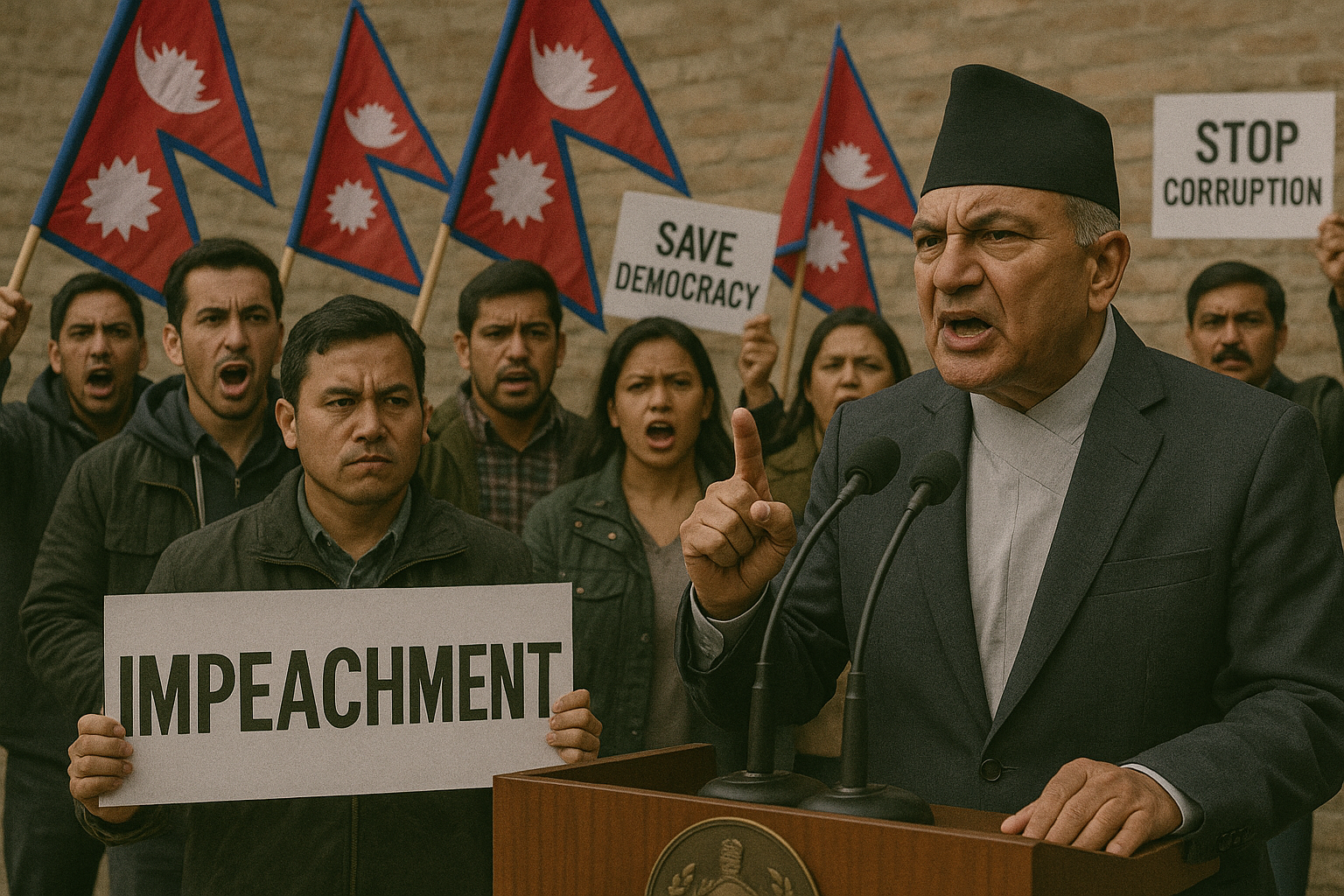
In Nepal, impeachment is designed as a constitutional safeguard — a tool to ensure that no official is above the law. Yet recent developments suggest it is increasingly being wielded as a political weapon. This trend raises important questions about judicial independence, separation of powers, and the stability of Nepal’s constitutional framework.
In February 2022, amid heightened tensions over the Millennium Challenge Corporation (MCC) compact, Nepal’s ruling coalition filed an impeachment motion against Chief Justice Cholendra Shumsher Rana. By law, the motion triggered his automatic suspension, leaving the Supreme Court in a state of uncertainty.
The case has sparked debate: is this a genuine pursuit of accountability, or an attempt to neutralize an institutional figure who had become inconvenient to political interests?
Article 101 of the Constitution of Nepal lays out the impeachment process:
While the framework exists to uphold accountability, no Chief Justice has yet been successfully impeached — reflecting both the procedural hurdles and the political stakes involved.
The concern raised by constitutional experts is clear: impeachment risks becoming a partisan instrument rather than a safeguard.
When political actors use the threat of impeachment to discipline or remove officials, it undermines judicial neutrality. Instead of protecting democratic institutions, it destabilizes them.
In Chief Justice Rana’s case, critics argue that political motivations may outweigh the stated constitutional concerns. Opposition parties, meanwhile, have threatened counter-measures, heightening fears of institutional paralysis.
“Exploring Nepal’s impeachment process: is it a tool of justice or political ploy? A legal analysis of Chief Justice Rana’s suspension and institutional reform.”
The impeachment saga exposes deeper structural issues:
A Legal Perspective
From a legal standpoint, impeachment must return to its intended role: a serious remedy for serious breaches, not a routine political tactic. To safeguard the system, reforms should prioritize:
Impeachment, if misused, risks destabilizing Nepal’s fragile democratic balance. Its value lies in being a rare and exceptional safeguard, not a political bargaining chip.
For Nepal’s constitutional order to mature, leaders must reaffirm that impeachment serves justice and accountability — not expediency. Only then can the process reinforce, rather than weaken, the foundations of governance.
#RuleOfLaw #NepalLaw #ConstitutionalLaw #Governance #Federalism #LegalReform #JudicialIndependence #NepalPolitics #PartisanPolitics #PoliticalInstability #DemocracyInNepal #FederalismNepal #ElectionsNepal #LocalGovernance #LawAndSociety #GoodGovernance #PublicPolicy #LegalInsights #LawFirmBlog
This article is intended for informational purposes only. It does not constitute legal advice, nor does it create an attorney-client relationship. Readers should consult qualified counsel for advice on specific legal issues.
The version of the article was published in The Record Nepal by Robin Sharma in March 11, 2022
Far far away, behind the word mountains, far from the countries Vokalia and Consonantia, there live the blind texts. Separated they live in Bookmarksgrove right at the coast of the Semantics, a large language ocean. A small river named Duden flows by their place and supplies it with the necessary regelialia. It is a paradisematic country, in which roasted parts of sentences fly into your mouth.