
 Introduction
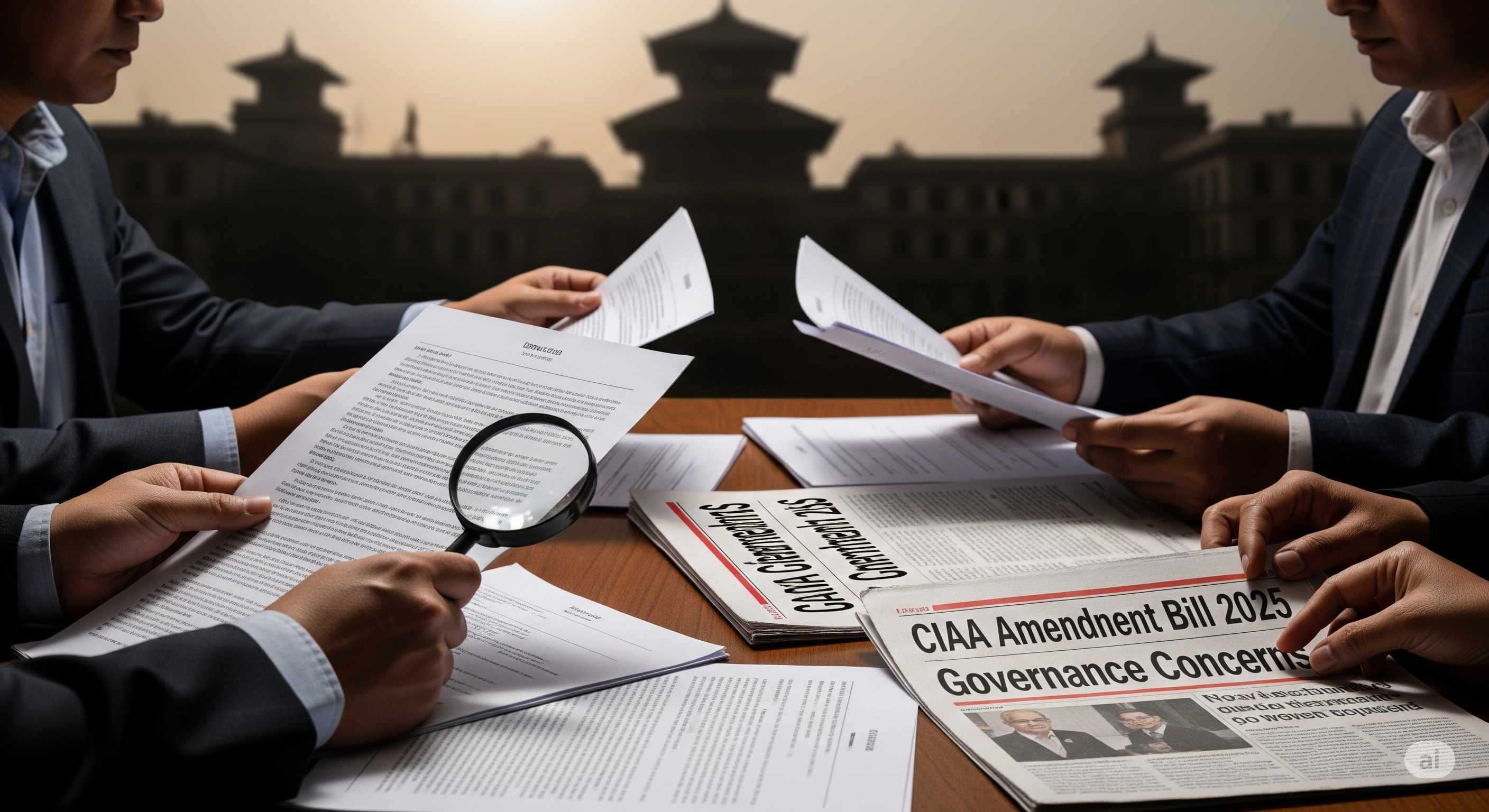
The proposed CIAA Amendment Bill 2025—which seeks to revise the Corruption Prevention Act (2002)—has sparked widespread debate in Nepal’s legal and governance circles. Critics argue that, in its current form, the bill risks undermining accountability, expanding executive overreach, and weakening constitutional safeguards.
This article examines the key provisions of the bill, why they matter, and what they could mean for governance, compliance, and the rule of law in Nepal.
The bill proposes to exclude policy decisions of the Cabinet, provincial, and local executives from CIAA scrutiny. While intended to protect legitimate policymaking, this exclusion risks creating loopholes where corruption may occur at the highest levels.
The amendment exempts federal and provincial legislatures from oversight, yet keeps local assemblies under CIAA’s jurisdiction. Such discriminatory treatment undermines Nepal’s federal balance.
No mechanism exists for restoring reputation or compensating individuals falsely accused. This omission threatens both due process and fairness.
Provisions compel other state bodies to act automatically on CIAA findings—even beyond corruption cases. This shifts the CIAA from an anti-graft watchdog toward a super-regulator, encroaching on other institutions’ autonomy.
The acceptance of “any electronic records” as evidence, without robust authentication standards, could open the door to abuse—especially in an era of deepfakes and digital manipulation.
While eliminating time bars for some corruption cases, the bill also extends liability far beyond an official’s tenure. Without balance, this risks prolonged legal uncertainty.
The CIAA Amendment Bill 2025, in its current form, represents a turning point for Nepal’s anti-corruption regime. While the fight against graft must remain strong, reforms must balance accountability with fairness, oversight with autonomy, and power with safeguards.
For lawyers, policymakers, and businesses alike, the bill underscores the importance of constitutional compliance and institutional checks. Any legal framework that overextends risks weakening, rather than strengthening, the fight against corruption.
Passing the CIAA Amendment Bill without careful revision would be inadvisable. To protect the integrity of Nepal’s governance system, amendments must be reworked to ensure:
Our Recommendation: Lawmakers, practitioners, and civil society should push for targeted reforms that strengthen the CIAA’s ability to fight corruption without undermining rule of law principles.
Far far away, behind the word mountains, far from the countries Vokalia and Consonantia, there live the blind texts. Separated they live in Bookmarksgrove right at the coast of the Semantics, a large language ocean. A small river named Duden flows by their place and supplies it with the necessary regelialia. It is a paradisematic country, in which roasted parts of sentences fly into your mouth.