
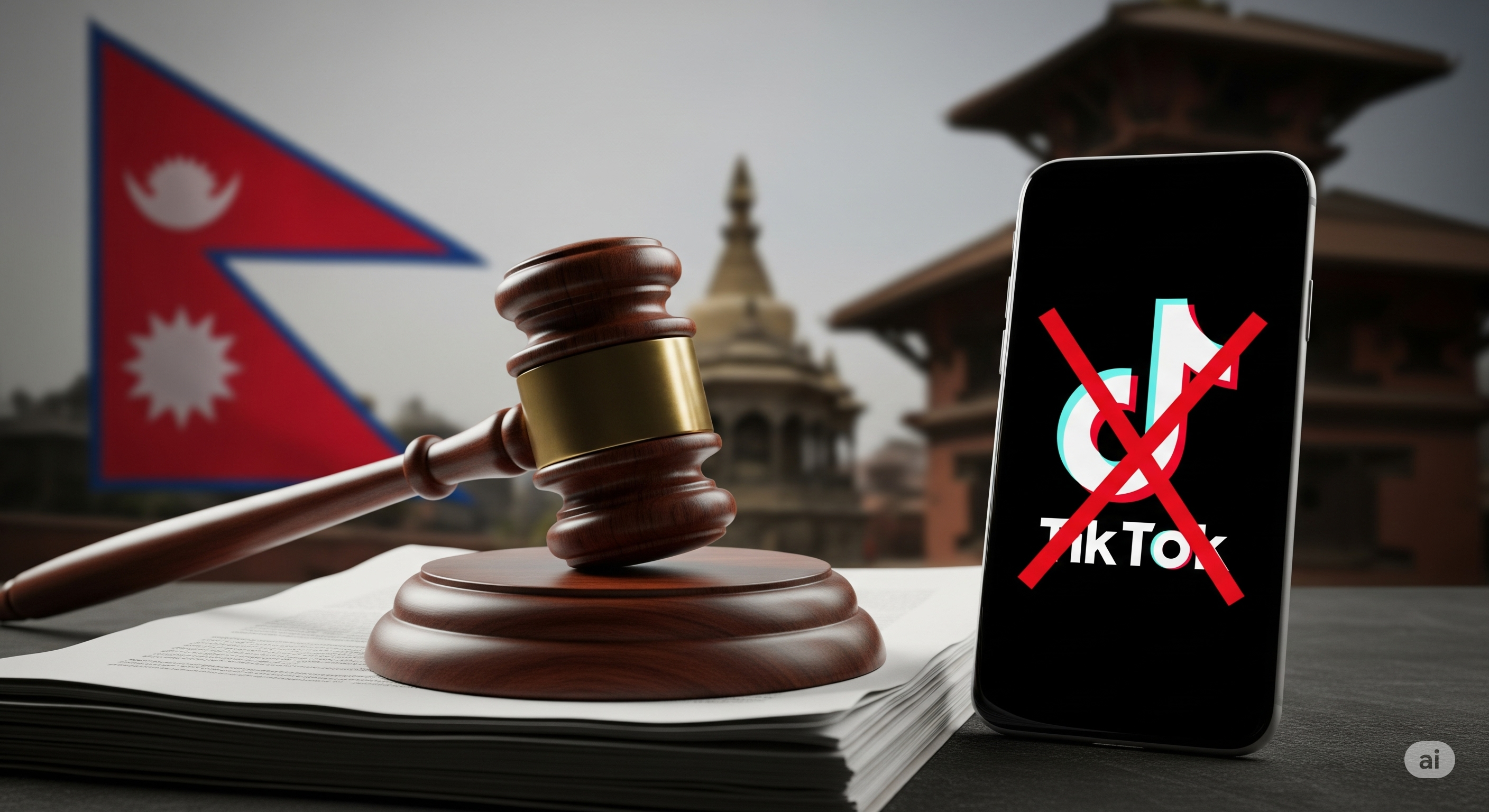
Nepal’s political landscape is currently heated, with controversial figures testing public sentiment, especially through religious sentiment. Meanwhile, the government had decided to ban TikTok, citing concerns over its role in disrupting social harmony. This decision has sparked division among the public, and a writ on the matter is pending in the Supreme Court. The debate centers on whether the government’s move is constitutional and justified.
The Constitution of Nepal guarantees the right to freedom of speech under Article 17 and Article 19, which protect citizens’ rights to express, inform, and receive information. This includes digital platforms like TikTok. However, the Constitution allows reasonable restrictions on freedom of speech in cases of national security, public morality, and social harmony, but such restrictions must be legislated through laws passed by Parliament, not by executive orders. The Supreme Court has ruled that restrictions should be imposed through law, not by executive action.
The government’s move to ban TikTok raises questions about its legality. While the government can regulate digital media, it cannot simply shut down platforms without passing a law in Parliament. The decision by the Council of Ministers to ban TikTok without such a legal framework violates constitutional principles, making it unconstitutional. The government can regulate content that undermines national unity or promotes criminal activity, but it must do so through proper legal channels.
The government claims that TikTok is spreading content that disrupts social harmony. However, before the ban, the Ministry of Home Affairs had been in discussions with TikTok’s Singapore office to manage harmful content, which makes the ban seem contradictory. Additionally, statistics show that complaints about other social media platforms like Facebook far outweigh those related to TikTok, raising doubts about the necessity of banning TikTok specifically.
The Constitution of Nepal guarantees creative and critical expressions, including content that might challenge the government. Banning TikTok affects millions of users, including rural entrepreneurs and youth groups. While concerns about harmful content on TikTok, such as illegal activities and obscene videos, are valid, the government should focus on regulating these issues through a legal framework. Democracy thrives on the free exchange of ideas, and the government must be cautious not to undermine this freedom by taking arbitrary actions against media platforms.
In summary, while the government has legitimate concerns about harmful content on TikTok, its decision to ban the platform lacks constitutional and legal backing. A more comprehensive approach, involving proper legislation and public discourse, is necessary to ensure the protection of citizens’ rights while regulating harmful online activities. The move to ban TikTok is seen by many as an overreach of executive power, bypassing constitutional safeguards and the necessary legal procedures.
Note: Since the publication of the Article on December 9, 2023, the government has again reopened TikTok in Nepal.
The detailed article was originally published in the UKAALO
https://www.ukaalo.com/opinion/20231209-tiktok-banned-in-nepal/12999